
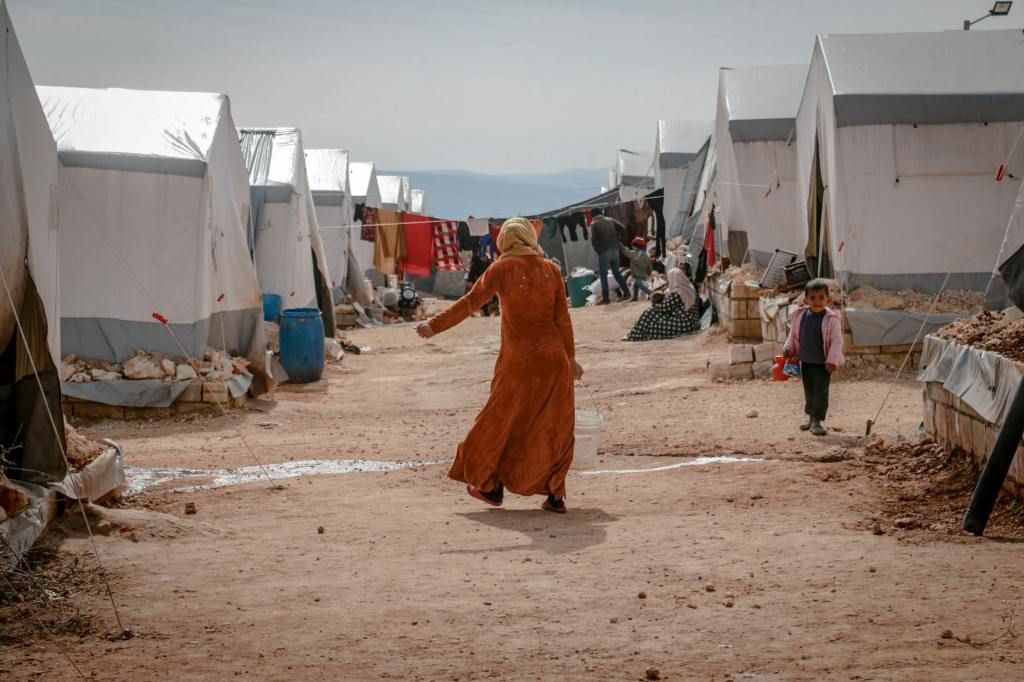
Throughout the past few years, the outbreak of military conflicts has been a seeming mainstay on the global stage. We’ve witnessed how, both within and between countries, they take a heavy toll economically, politically, socially—you name a civic realm and chances are it would be touched by a war, creating innumerable ways for ordinary citizens to suffer as a result of the combat around them. This trickles into their wellbeing, and it’s why we see so many reports detailing the declines in public health that wars cause in their respective regions. Today, these spotlights focus on the people enduring overflowing hospitals, medical supply shortages, and inaccessible humanitarian aid through both the Hamas-Israel and Ukraine-Russia wars. These and similar conditions can boil to unbearable points for individuals and their families, contributing to the huge numbers of refugees that typically follow. For instance, the first five weeks alone of the Ukraine-Russia war in 2022 saw 4 million displacements, with the number more than doubling by February of this year. It’s nothing new, either. One can even look back to the second World War for another striking example. Across just six years, it led to about 60 million fleeing their homes. Wartime isn’t the only cause for these refugee crises, though. Oppressive socio-political conditions, natural disasters, and even harshening climates can also force mass exoduses. Unfortunately, while finding new homes can alleviate refugees’ most acute agonies, they are still quite prone to many health issues as they find safe havens.
This is most obvious in their physical health. Refugees are particularly predisposed to starvation and dehydration. Unsafe migration methods and routes can also contribute yer another strain, through potential exposure to hypothermia. By themselves, the three are quite daunting prospects. However, these also weaken their immune systems, making them susceptible to infectious diseases. Although the likelihood is low that these diseases will be problematic for the population of the country in which they eventually arrive—this is of special importance, as widely acknowledging it is a crucial step in eliminating the xenophobia and stigmatization that is thrown refugees’ way and makes it more difficult for them to establish healthy, successful lives—, this doesn’t erase the fact that the refugees themselves still suffer from them. Infectious diseases are already dangerous for most. But the threat they pose to refugees with weakened immune systems is magnitudes greater. This is aggravated by medical care, sanitation, and other health services and basic resources being quite difficult to find in their circumstances. Consequently, many refugees may lack access to responsive and preventative treatments when they contract an illness. Their lack of proper medical attention can also exacerbate chronic conditions. These include diabetes, cardiovascular diseases, and cancers, which can all grow to pose substantial hazards to their lives when not managed with the help of a health professional and adequate treatments. Expecting mothers are another subset of the refugee population who face considerable challenges. Without proper maternal care, both the mother and the child’s life can be placed in jeopardy by pregnancy and delivery complications. Much less obvious, though, are the deteriorations in mental health that refugees tend to experience. PTSD, anxiety, depression, and other mood disorders tend to be among the most reported conditions, with the American Psychiatry Association noting that the prevalence for refugees can be as high as one in three. The arduous conditions they faced prior to their immigration can be contributing factors, especially in war-torn or oppressed regions and after natural disasters with high death tolls. However, one also has to consider the strains that the migration itself can create. Refugees are forced to give up the lives they had built and start anew in a wholly foreign place—all without assurance of their success, safety, or health.
When displacement leaves such lasting impacts, it’s crucial to ensure that refugees continue to be taken care of once they finally escape the grasp of their local tragedies. Yet, in the United States, systemic hurdles can make this an arduous task. In some cases, they can even add to existing health declines. For instance, a lack of citizenship or resident status can mean that refugees are barred from accessing traditional healthcare in full or at all. America’s medical system can also lack adequate support as refugees try to navigate their way through gaining and using coverage. Lackluster legal and documentative guidance, alongside insufficient interpretation services, are only a few of such bottlenecks. The latter of the three can continue to be a burden once they are able to access care. Healthcare relies substantially on patient-provider communication. Physicians, nurses, PAs, and other medical professionals must have a thorough understanding of a patient’s health to adequately treat them. Naturally, this requires that patients communicate their concerns so that they can be addressed in manners that work to best fit them and their needs. But many refugees do not speak the same language as their health teams. Without well-trained and accessible interpreters, such language barriers can create disconnects that ultimately hamper the quality of care that is provided. The cost attached to getting treatment can also scare away many refugees, especially those coming from impoverished regions and without financial support in the US. This issue is made more pressing by the fact that refugees are twice as likely to be unable to find a job than the general population. These can all build situations where refugees are unable to resolve their physical health issues, and it’s a similar story in regards to their mental health. In fact, while almost half of American adults receive mental health screenings, only thirty seven percent of refugees do. While this may not be completely linked to such services being offered at a lower rate to refugee adults, it serves as a clear indication that more could be done to ensure that they take advantage of them. For instance, only three percent of all refugees are directly referred to further mental health care after preliminary examinations—and this occurs in the face of higher rates of poor mental health among immigrant populations.
All of this information should catch the attentions of health professionals, public officials, and the students who aspire to these careers. For us, protecting the health of others is a top priority at all times. Working to build widespread recognition of the aforementioned—and the countless other—institutional and societal factors impeding their ability to obtain care is a step that must be followed by actions that seek to correct them. Refugees also stand to benefit from pushing for a more diverse medical workforce. Homogeneity in providers does not create problems when that same homogeneity is reflected in their patients. But, when physicians and other health professionals represent a wider array of ethnicities and cultures, the healthcare system gains somewhat of a safety net with which to handle incoming refugee patients from a similar breadth of backgrounds. Additionally, we must educate others to leave behind the various stigmas and pervasive xenophobia held about refugees. They only serve to entrench refugees’ suffering by directly contributing to their mental health declines and by creating antagonistic environments that do little to alleviate other inequities. And whether we’re directly treating refugee patients, advocating for new policies that protect their health, or anything in between, it’s our job to always think creatively and design outside-the-box solutions that remedy the perils we see these barriers posing. We bear a responsibility to empower patients to take care of their health, and the current landscape demands action from our part to shape more equitable and accessible healthcare. Wouldn’t it be hypocritical to commit to upholding society’s wellbeing, but neglect refugee patients and their needs?
References:
- Boudreau, Diane et al. “Refugee.” National Geographic, 19 October 2023, https://education.nationalgeographic.org/resource/refugee/.
- De Meo Hoyt, Lara. “Rutgers Researchers Identify Impacts of Russia-Ukraine War on Hospitals.” Rutgers University, 17 May 2024, https://www.rutgers.edu/news/rutgers-researchers-identify-impacts-russia-ukraine-war-hospitals.
- Jamil, Hikmet et al. “Promoters and barriers to work: A comparative study of refugees versus immigrants in the United States.” New Iraqi Journal of Medicine, 2012, https://pubmed.ncbi.nlm.nih.gov/25745518.
- Khawly, Gabby. “Public Health as the Antidote for, not a Weapon Against, the Refugee Crisis.” Columbia University Mailman School of Public Health, 28 February 2022, https://www.publichealth.columbia.edu/news/public-health-antidote-not-weapon-against-refugee-crisis.
- “Mental Health Facts on Refugees, Asylum-seekers, & Survivors of Forced Displacement.” American Psychiatric Assocation, https://www.psychiatry.org/File%20Library/Psychiatrists/Cultural-Competency/Mental-Health-Disparities/Mental-Health-Facts-for-Refugees.pdf. Accessed 12 June 2024.
- Nayak, Anika and Divya Chhabra. “Migrants come to the U.S. with trauma. A broken mental health system adds stress.” Harvard Public Health, 28 February 2024, https://harvardpublichealth.org/mental-health/four-ways-to-fix-the-u-s-refugee-mental-health-crisis/.
- “Refugee and migrant health.” World Health Association, 2 May 2022, https://www.who.int/news-room/fact-sheets/detail/refugee-and-migrant-health.
- “Refugee Health: From the Public Health Perspective.” Keck School of Medicine of USC, 8 November 2023, https://mphdegree.usc.edu/blog/refugee-health-from-the-public-health-perspective.
- Suzuki, Emi and Caroline Sergeant. “New UNHCR data points to record number of worldwide refugees in 2022 driven largely by the war in Ukraine.” Data Blog, 20 June 2023, https://blogs.worldbank.org/en/opendata/new-data-unhcr-points-record-high-number-worldwide-refugees-2022.
- “The collapse of Gaza’s health system.” International Rescue Committee, 9 February 2024, https://www.rescue.org/article/collapse-gazas-health-system.
- “The health of refugees and migrants in the WHO European Region.” World Health Organization, 30 August 2023, https://www.who.int/europe/news-room/fact-sheets/item/the-health-of-refugees-and-migrants-in-the-who-european-region.
- Tomsic, Mary. “Learning from the past: Working with WWII refugees.” The University of Melbourne, 19 June 2017, https://pursuit.unimelb.edu.au/articles/learning-from-the-past-working-with-wwii-refugees.
- “Ukraine Emergency.” USA for UNHCR, https://www.unrefugees.org/emergencies/ukraine. Accessed 12 June 2024.
- “Unique health challenges for refugees and asylum seekers.” British Medical Association, 4 September 2023, https://www.bma.org.uk/advice-and-support/ethics/refugees-overseas-visitors-and-vulnerable-migrants/refugee-and-asylum-seeker-patient-health-toolkit/unique-health-challenges-for-refugees-and-asylum-seekers.
 MedConnect