

What is one made up of? What factors make an individual who they truly are? There has been an ongoing debate since the mid-1800s that discusses if nature or nurture is responsible for one’s adulthood traits. Nature refers to how one’s genetics and biological factors influence an individual’s development, whereas nurture describes how environmental factors and culture shape who we are. Many famous thinkers took part in this debate, including Plato, Descartes, John Locke, and John B. Watson. Plato and Descartes argued that factors are inborn and occur regardless of environmental influences. John Locke believed that each human is born a “tabula rasa”—which translates to “blank slate”—and that experiences shape one into who they are. As a behaviorist, Watson argued that genetic background has no impact, since people could simply be trained to do anything. The nature vs. nurture debate should not be left as black and white, however. More often than not, both sides have an equal impact on who one turns out to be.
Genetic inheritance from parents and other biological factors mean that nature’s effects take place before one is even consciously aware. According to Simply Psychology, “Color of eyes, straight or curly hair, pigmentation of the skin, and certain diseases…are all a function of the genes we inherit,” a concept that can be applied to human psychology. The psychological nativist positions believes in extreme influences from nature. It holds that everything one portrays is a product of evolution and genetic inheritance. To nativists, individual differences are merely due to unique genetic codes. For instance, Sigmund Freud once argued that aggression, as a drive that comes from within, is tied to genetic factors. But defining every human characteristic through the lens of nature’s influence does not explain some of the phenomena we see through out the world. How do twins who have the same genetic code develop different personality traits when raised apart? Similar events everywhere bring to question whether biology really is all that makes us up. They poke holes in the nativist theory, and make the debate lean away from it. Clearly, nurture impacts one’s development, too.
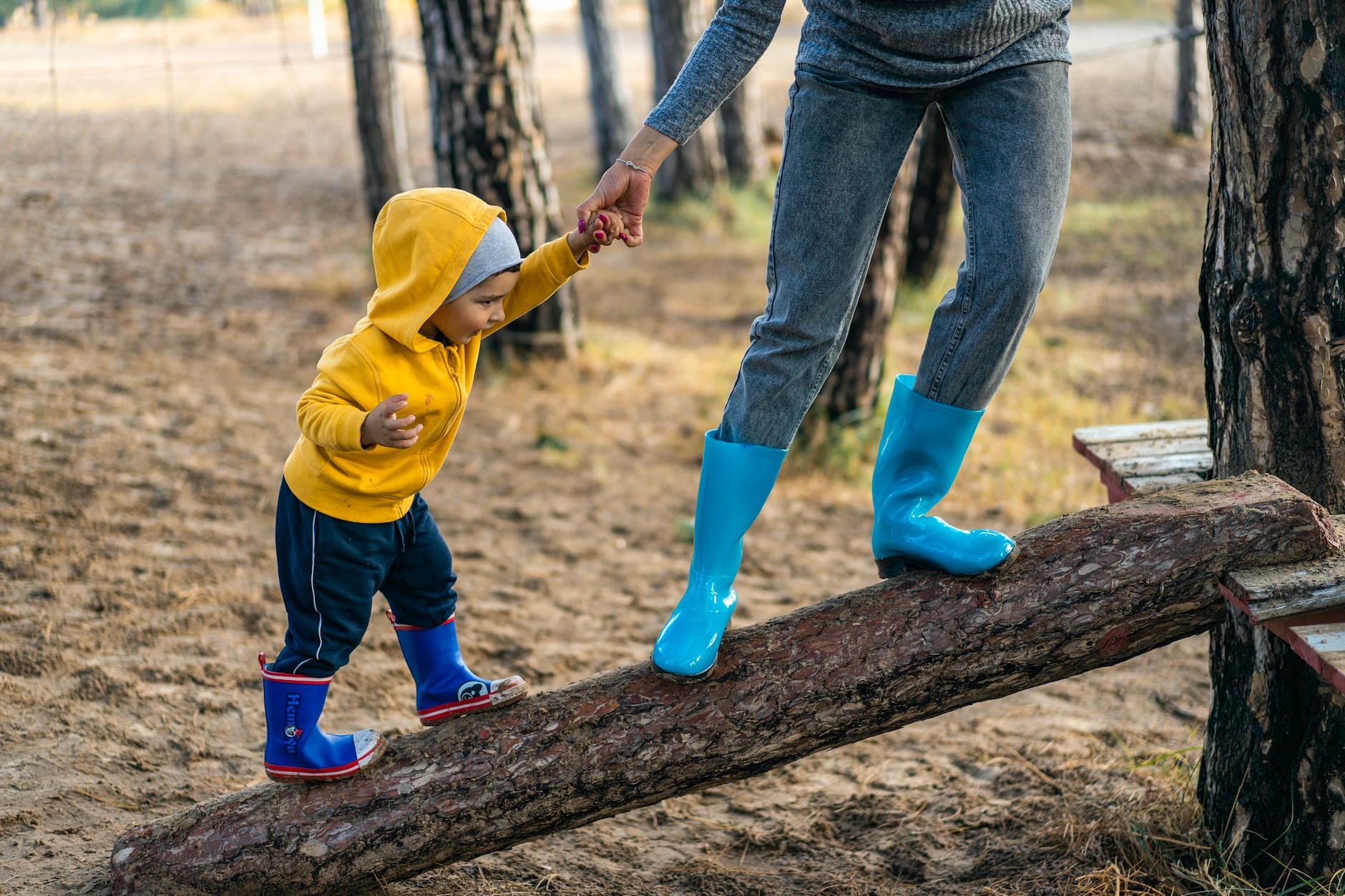
Is it our environment, or the people around us?
Cultural experiences are ingrained daily into everyone’s minds and shape the members of our society into who they are. It has a huge impact on how one behaves in life. An individual’s culture influences their traits and, without it, simple genetic influences would not be expressed to the same magnitude. On the flip side of nativists are empiricists, who believe that only experience shapes individuals. The famous Bobo Doll Experiment is a great example of their stance, since it showed how aggression was learned through observation and imitation, rather than innate. This deflated Freud’s point. But there still remain many traits only nature can account for. If both nature and nurture are out of the picture as sole dominators of personality, what could the final answer possibly be? What factors make one into who they are?
I think a reasonable consensus lies in the middle—both nature and nurture must play a role in one’s traits. Imagine a spectrum with each on opposite sides. Life is exactly towards the middle of this spectrum. Only gaining nature’s effects only gaining nurture’s would create personalities with gaps. The interaction of nature and nurture results in complete traits and mannerisms—complete personalities. As PRB points out, “Two decades of research make it increasingly clear that both nature and nurture always play a role—that is, the extent to which genetic factors affect behavior depends on the social environment in which people live, work, and play.” Nature and nurture work together to make an individual’s personality. An individual cannot be one with merely eye color, diseases, or height. They need the cultural experiences that come along with the human experience to shape them into who they truly are. Life is not one-sided and debates like this should usually not be extremified. Both of its sides can be understood and work in unison, rather than against each other. One should not view nature vs. nurture as a debate, but rather as a harmonious relationship that makes up one’s true self. We don’t live in set colors. We live in gradients. It is silly to fight over this fact. Who invented debates after all?
References
- By, et al. “Nature vs. Nurture in Psychology.” Simply Psychology, 27 Oct. 2023, www.simplypsychology.org/naturevsnurture.html.
- Kendra Cherry, MSEd. “What to Know about Nature vs. Nurture.” Verywell Mind, Verywell Mind, 19 Oct. 2022, www.verywellmind.com/what-is-nature-versus-nurture-2795392.
- Nature and Nurture: How Culture Shapes US | Psychology Today, www.psychologytoday.com/us/blog/between-cultures/202309/nature-and-nurture-how-culture-shapes-us.
- Serpell, Mick. “Guest Editorial.” British Journal of Pain, U.S. National Library of Medicine, Nov. 2013, www.ncbi.nlm.nih.gov/pmc/articles/PMC4590158/#:~:text=The%20phrase%20’nature%20versus%20nurture,and%20environment%20on%20social%20advancement.
 MedConnect